
What cardio can I do with high hamstring tendinopathy?

Updated: Aug 24
I’ve previously discussed in detail how you can continue running with proximal (high) hamstring tendinopathy. In this article, I’ll share some additional cardio cross-training options and explain how you can safely experiment with and adapt them to suit your situation.
Remember, if you need help with an injury, you're welcome to consult one of our physios online via video call.

The terms tendinitis, tendonitis, tendinosis, and tendinopathy mean the same thing for all practical purposes, and we use these interchangeably in our articles. Read more (opens in new window).
In this article:
We've also made a video about this:
Some of the links in this article are to pages where you can buy products discussed or mentioned here. We might earn a small commission on sales at no extra cost to you.
Nothing is 100% taboo, but …
Before we look at specific cardio cross-training activities, I should point out that we’re all different, and every case of high hamstring tendinopathy usually has its own unique mix of things that aggravate or help.
I’m going to share the advice that I find works for most people, but I would always suggest that you test these things for yourself, because activities that work really well for one person might make the next person worse – and vice versa.
💡 And remember, the most aggravating movements are usually ones that stretch the hamstrings or compress the tendons against the sit bones (this happens when you bend your hips or trunk forwards). You can read more about why this is here.

Here’s the method that I’ve found works best for testing activities to avoid severe pain flare-ups:
Test a very short, easy session – no more than 10 minutes if you have no idea whether it will work. That way, if it does flare up, it usually isn’t too bad and settles down quickly.
Check how you feel during the session – if you’re aware of slight discomfort (no more than 3 out of 10) and it doesn’t increase above that, it’s a good sign.
Also check how your symptoms respond during the 24-hour period after the activity – if your pain increases significantly and stays elevated for more than 24 hours, that activity might need to be adapted or left for later in your rehab.
👉 It is normal and expected to be a bit more aware of your injury for up to 24 hours after an activity. What’s significant is how much the discomfort increases compared to normal, and how long that increase lasts.
Increased pain does not mean you’re making your injury worse, but if it’s regularly triggered at a high level, it can sensitise the pain system, which then prevents it from calming down (read more about that here).
Why walking is good for high hamstring tendinopathy
Most people with high hamstring tendinopathy can usually walk, but you might have to adapt it to suit your tendon’s current tolerance.
If your tendon is very sensitive and easily irritated:
Walk at a leisurely pace.
Stick to flat terrain.
If you do have to walk up a hill, slow down and take shorter steps.
💡This type of walking might not feel like a great cardio workout, but it can help improve your tendon’s circulation (which supports healing and helps reduce pain) and build its tolerance to walking (which is something we all have to do).
You can progress your walking as your tendon calms down and increase the cardio challenge by:
gradually increasing your speed, while taking care not to take overly long steps,
adding a few hills into your route (or inclined treadmill walking) – starting slowly and increasing your uphill pace over time (this also helps build hamstring strength).

Elliptical trainer (or cross-trainer)
The elliptical trainer can be a good cardio alternative to running and is usually well tolerated by most people with high hamstring tendinopathy.
It allows you to control the intensity at a granular level and limits step length, which means you’re less likely to irritate the high hamstring tendons.

Swimming
Freestyle or backstroke is usually better tolerated than breaststroke. I think this is because the frog-leg action of breaststroke causes the high hamstring tendons to move in a way that rubs them against the sit bones.
If you prefer breaststroke, reducing the leg action can help. Alternatively, you can swim using only your arms while holding a pull buoy between your thighs (this also works if freestyle kicking hurts).
Examples of pull buoys:
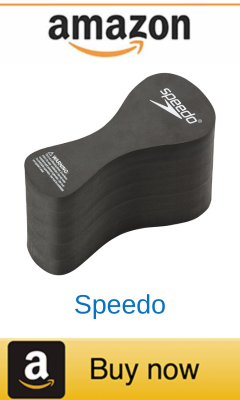
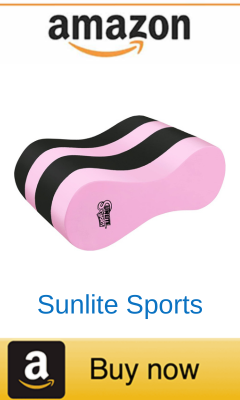
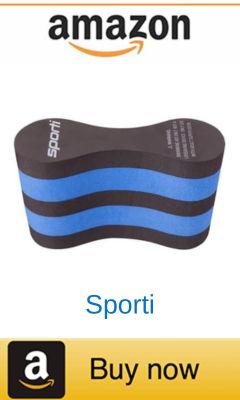
It doesn’t always have to be the kicking action that causes the problem – kicking off the wall can sometimes be the main trigger. So, see whether adapting that for a while makes a difference.
Stair climbing machines (Stair Master)
These are usually not a good idea in the early days. Climbing stairs requires your hamstrings to work quite hard in a position that brings the upper tendons closer against the sit bones, which often irritates them early on.
👉 This doesn’t mean you shouldn’t climb stairs – I just wouldn’t use them for exercise.
However, the stair climbing machine can be reintroduced in the later stages of rehab. I’d recommend getting guidance from your physio on when you’re ready for it.


Can I cycle with high hamstring tendinopathy?
Usually not. Cycling is one of the most problematic options because it combines two elements that can irritate your high hamstring tendons:
The saddle often presses directly on the injured area, which can really irritate it.
You have to flex your hip a lot and tend to lean forwards as you push through the pedals, which means the upper hamstring tendons are compressed and stretched quite tightly over the sit bones, and this can irritate it.
Cycling adaptations that might help:
Choosing a recumbent bike in the gym can remove pressure from the injured area and reduce the angle at your hips.
Trying to sit more upright on your regular bike.
Reducing the intensity and sticking to very easy gears may also help.
Getting a padded saddle sounds like a good solution, but in my experience it isn’t that effective.

Rowing machine
It’s usually best to stay off the rowing machine if you have high hamstring pain.
The part of the rowing action that tends to cause problems is when your hips and knees are fully flexed – with the high hamstring tendons compressed against the sit bones – and you then have to push them out straight against the resistance of the machine, which further increases the compression force.
How we can help
Need help with an injury? You’re welcome to consult one of the team at SIP online via video call for an assessment of your injury and a tailored treatment plan.

We're all UK Chartered Physiotherapists with Master’s Degrees related to Sports & Exercise Medicine or at least 10 years' experience in the field. But at Sports Injury Physio we don't just value qualifications; all of us also have a wealth of experience working with athletes across a broad variety of sports, ranging from recreationally active people to professional athletes. You can meet the team here.


About the Author
Maryke Louw is a chartered physiotherapist with more than 20 years' experience and a Master’s Degree in Sports Injury Management. Follow her on LinkedIn and ResearchGate.


